
By Jane Fraser-Hook, Head of Marketing

When people think about accessible bathroom design, they often focus on physical accessibility. Can the person transfer safely? Is there enough space for equipment? Is the layout suitable for carers?

These are all important questions. But for people living with dementia, good bathroom design is about much more than physical access alone. Colour and contrast can have a significant impact on how a bathroom is understood, navigated and used.

Read more about designing bathrooms for people with dementia

Understanding How Dementia Affects Perception

Dementia does not simply affect memory. It can also affect how the brain interprets visual information.

As dementia progresses, some people may find it more difficult to distinguish between similar colours, identify important objects, judge depth or interpret changes in surfaces and levels. This can make everyday environments feel confusing or overwhelming.

In a bathroom, where safety, confidence and independence are particularly important, these visual challenges can have a significant impact.


Helping Important Features Stand Out

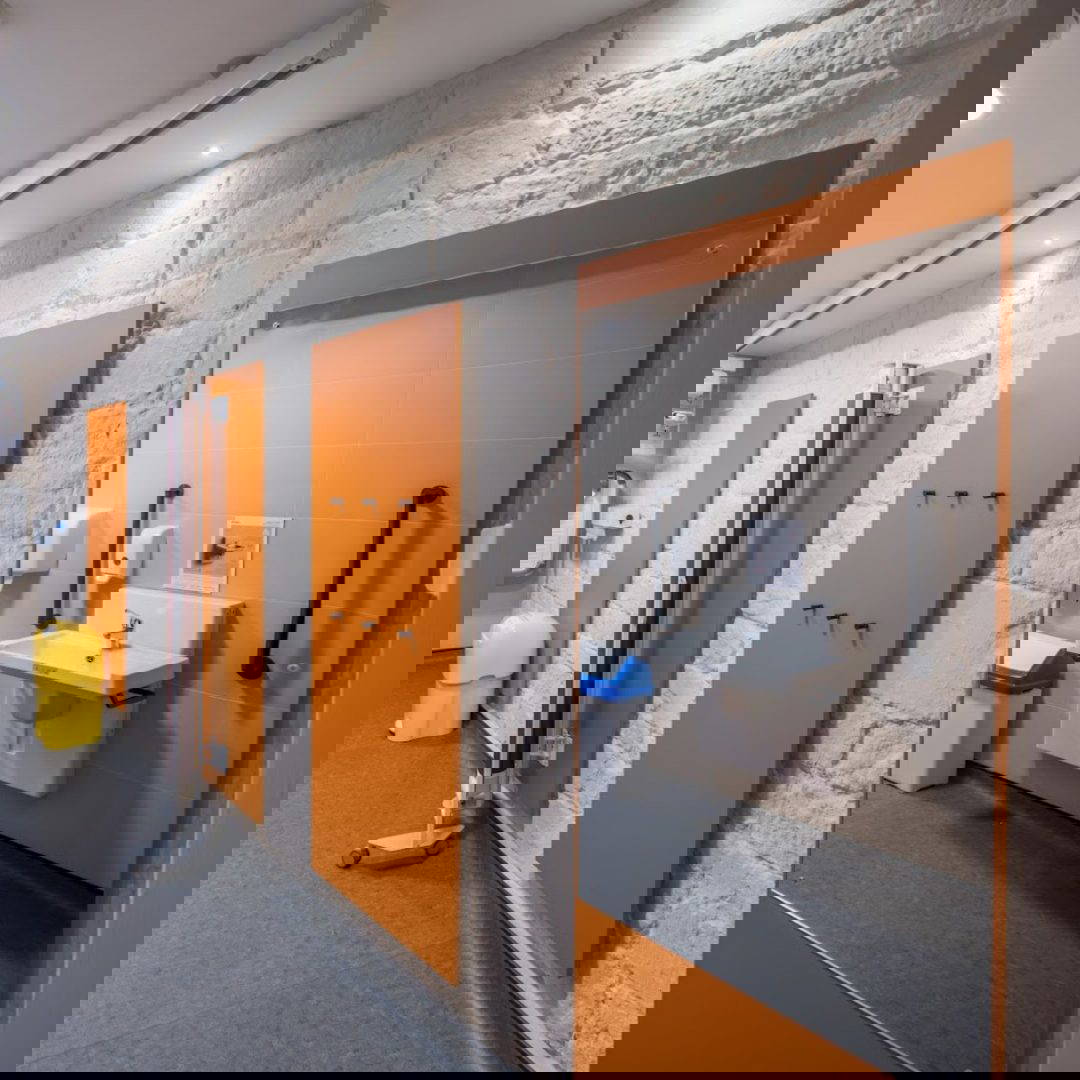
One of the most effective ways to support people living with dementia is through the thoughtful use of contrast. Features such as toilets, toilet seats, grab rails, basins and controls should be easy to identify against their surroundings.

For example:

  • A grab rail that contrasts clearly with the wall behind it is easier to locate.
  • A toilet that contrasts with the toilet pan or a bathing seat that contrasts with the bath can help the user recognise where to sit.
  • Clearly defined boundaries between walls and floors can improve orientation within the space.

The aim is not to create a highly coloured environment, but one where important features can be recognised quickly and confidently.

Colour Is About Clarity, Not Decoration

There is a common misconception that dementia-friendly design means making everything bright red.

In reality, there is no single “dementia colour”. What matters is contrast.

Any colour can be effective if it stands out clearly from the surrounding surfaces. A blue grab rail against a pale wall may be just as effective as a red one.

The key is ensuring that important features are visible and easy to distinguish.
Avoiding Unintended Confusion

Just as helpful contrast can improve confidence, poor colour choices can create unnecessary challenges.

Dark floor areas may sometimes be perceived as holes or changes in level. Busy patterns can be mistaken for objects on the floor. Highly reflective surfaces may appear wet or difficult to cross.

For this reason, dementia-friendly bathrooms often benefit from:

  • Simple, uncluttered finishes
  • Matte rather than highly reflective surfaces
  • Limited use of busy patterns
  • Clear visual separation between key elements
Changing Places Toilet At St Pauls Cathedral Accessibility

Colour Is Only Part of the Picture

Colour and contrast are powerful design tools, but they should never be considered in isolation.

Successful dementia-friendly bathrooms also consider:

  • Lighting
  • Familiarity
  • Layout
  • Signage
  • Equipment choice
  • Carer support
  • Future needs

Most importantly, they consider the individual. No two people experience dementia in exactly the same way, and there is no single design solution that works for everyone.

Care Home Bathing
Changing Places Toilet At St Pauls Cathedral Accessibility

Designing for Confidence and Independence

At Astor Bannerman, we believe good dementia-friendly design is about helping people feel comfortable, confident and supported in their own homes.

Colour may seem like a small detail, but when used thoughtfully it can make a significant difference to how a bathroom is experienced every day.

Because accessible design is not simply about making spaces usable. It is about making them understandable, reassuring and as easy to navigate as possible.

Cotswolds Farm Park Changing Places Toilet Accessibility Hoist
A happy girl in a Astor Bannerman ceiling hoist sling, with support from her parents,